
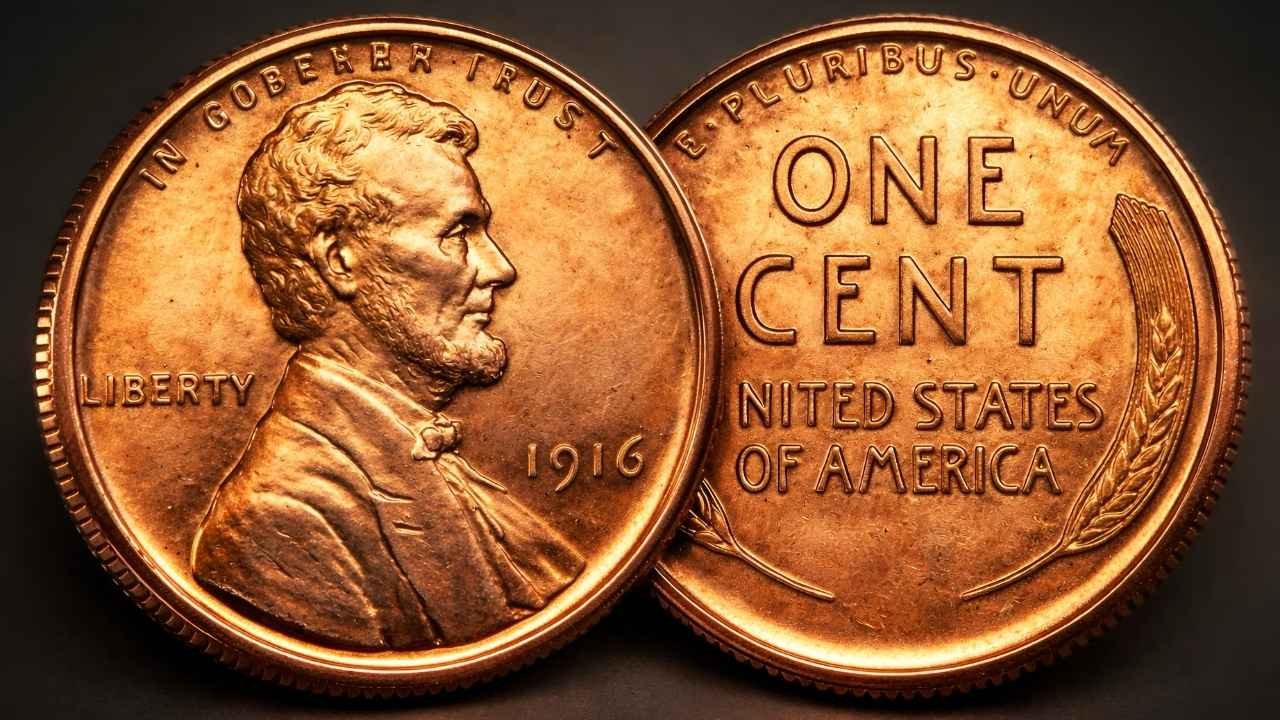
The 1916-S Lincoln cent, part of the early Wheat Penny series (1909–1958), is one of the most sought-after dates among collectors. While common circulated examples trade for modest sums, top-grade specimens and certain varieties can reach thousands—with the finest examples approaching or exceeding $10,000 at auction in 2026. Minted in San Francisco with only 22,510,000 pieces produced, the 1916-S has a relatively low mintage for the series and suffers from poor survival in gem condition due to heavy circulation. This value guide explains the 1916-S wheat penny value in 2026, key factors driving prices, current market trends, and why certain examples are worth thousands today.
Brief History of the 1916-S Lincoln Cent
The Lincoln cent debuted in 1909 with Victor David Brenner’s design: Lincoln’s portrait on the obverse and wheat stalks (“Wheaties”) on the reverse. The 1916-S was struck at the San Francisco Mint during World War I, when coinage demand was high but quality control varied. Composition is 95% copper, 5% tin and zinc, giving the classic bronze color. Mintage was moderate compared to Philadelphia and Denver issues, but heavy wear in circulation left few high-grade survivors. This scarcity in MS-65+ condition drives the coin’s value far beyond common dates.
Factors Driving 1916-S Wheat Penny Values in 2026
Condition reigns supreme—PCGS or NGC grades of MS-65 Red (RD) or higher command the biggest premiums. Rarity increases dramatically above MS-65 due to strike weakness and circulation wear. Market demand in 2026 remains strong, with registry set competition and auction activity pushing top examples higher.
- Color designation: Full Red (RD) brings the highest prices; Red-Brown (RB) and Brown (BN) trade lower.
- Strike quality: 1916-S coins often show weakness in Lincoln’s hair and wheat lines—sharp strikes are rare.
- Certification: PCGS/NGC slabs add authenticity and boost resale value significantly.
1916-S Wheat Penny Prices in 2026
Here are approximate values based on recent auction data and market trends:
| Grade (PCGS/NGC) | Color Designation | Typical Value Range (2026) | Record High Sale |
|---|---|---|---|
| Good-4 to Fine-12 | Any | $10 – $50 | — |
| Very Fine-20 to XF-45 | Any | $50 – $150 | — |
| About Uncirculated-50 to 58 | Any | $150 – $500 | — |
| MS-63 to MS-64 | Red (RD) | $500 – $2,000 | — |
| MS-65 | Red (RD) | $2,000 – $5,000+ | $5,000+ |
| MS-66 | Red (RD) | $5,000 – $15,000+ | $15,000+ |
| MS-66+ to MS-67 | Red (RD) | $15,000 – $50,000+ | $50,000+ |
The finest certified examples (MS-66+ RD) are extremely rare and can push into five figures due to low population reports.
How 1916-S Cents Reach Thousands
Coins reach thousands through:
- Low survival in gem condition — Most were heavily circulated; few survive in MS-65+ RD.
- Strong strike & eye appeal — Sharp details in Lincoln’s hair and wheat stalks are rare for 1916-S.
- Full original red color — RD designation adds massive premium over RB or BN.
- High-grade certification — MS-65+ slabs from PCGS/NGC
- Registry competition — Collectors chase top spots in major sets
The 1916-S is a semi-key date in the series, with gem red examples consistently among the strongest performers.
Current Market Trends in 2026
Lincoln cents remain popular in 2026, with early dates like 1916-S benefiting from registry set demand. Online auctions (Heritage, GreatCollections) regularly feature four- and five-figure sales for high-grade 1916-S pieces. Circulated examples with eye appeal trade in the $50–$150 range, while MS-65+ RD coins continue to set records.
How to Identify and Value Your 1916-S Wheat Penny
- Confirm the date (1916) and mint mark (S below the date).
- Check for full original red color (RD) vs. red-brown or brown.
- Examine strike quality—sharp details in hair and wheat lines add value.
- Look for any doubling or repunching (rare varieties exist but are not major).
- Submit high-grade or questionable coins to PCGS or NGC for grading.
- Use auction archives (Heritage, GreatCollections) for recent comparable sales.
FAQs – 1916-S Wheat Penny Value Guide
- What is a 1916-S Wheat Penny worth in average circulated condition? Typically $10–$50 depending on grade and eye appeal.
- How much is a high-grade 1916-S worth? MS-65 Red examples range $2,000–$5,000+; gem MS-66+ can reach $15,000–$50,000+.
- Why are some 1916-S cents worth thousands? Low survival in gem red condition, strong strike rarity, and collector demand drive prices.
- How do I tell if my 1916-S is valuable? Look for full red color, sharp details, and high grade—get it certified by PCGS or NGC.
- Where should I sell a valuable 1916-S Wheat Penny? Major auction houses (Heritage, GreatCollections) or reputable dealers; always grade high-value coins first.
Conclusion
In 2026, most 1916-S Wheat Pennies remain affordable, but gem red examples and strong strikes prove that early Lincoln cents can be worth thousands. From circulated coins at $10–$50 to MS-66+ specimens reaching five figures, the potential is real for careful collectors. Examine your collection or change with a loupe, submit promising pieces for grading, and follow major auctions for the latest trends. The thrill of classic U.S. coin collecting lies in exactly these hidden gems—happy hunting!