
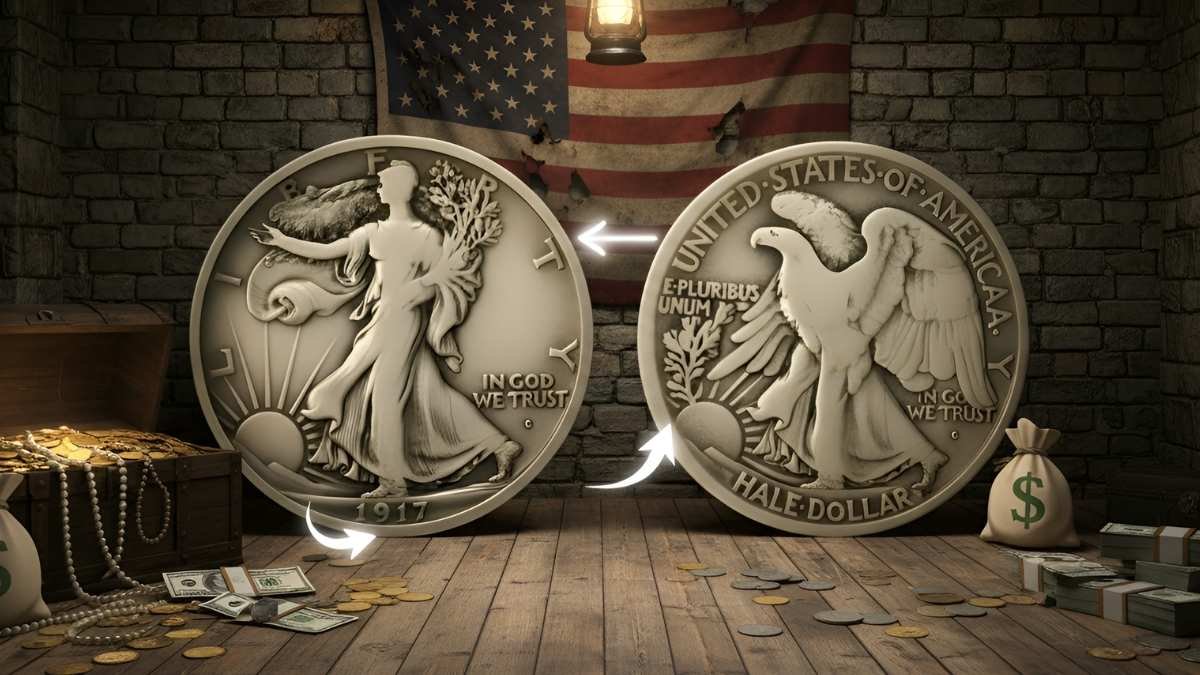
The 1917 Walking Liberty half dollar, part of Adolph A. Weinman’s iconic series (1916–1947), remains a favorite among collectors for its stunning design and historical significance. While common circulated examples trade near melt value, certain high-grade specimens, key date varieties, and dramatic errors can command impressive prices—some reaching five and six figures at auction. In 2026, demand stays strong, fueled by registry sets, online auctions, and renewed interest in early 20th-century silver coins. This value guide explains the 1917 Walking Liberty half dollar prices, highlights the rarest varieties collectors seek, current market trends, and how everyday coins compare to true rarities.
Brief History of the 1917 Walking Liberty Half Dollar
The Walking Liberty half dollar debuted in 1916, with 1917 being the first full-year production. Coins were struck at Philadelphia (no mint mark), Denver (D), and San Francisco (S). The obverse features a full-length Liberty striding toward the sunrise, while the reverse shows an eagle perched on a mountain. Mintage was substantial for most 1917 issues, but low survival in gem condition and specific varieties create significant rarity. Composition is 90% silver, adding melt value (around $10–$12 in 2026) plus numismatic premium.
Factors Driving 1917 Walking Liberty Half Dollar Prices in 2026
Condition is paramount—PCGS or NGC grades of MS-65+ or higher command huge premiums. Rarity comes from low mintage (especially 1917-S), survival rates, and dramatic varieties. Market demand in 2026 remains robust, with registry competition and auction activity pushing top examples higher.
- High-grade survival: Coins in MS-66+ are extremely scarce.
- Varieties: Overdate, repunched mint marks, and doubled dies drive value.
- Certification: PCGS/NGC slabs add authenticity and boost resale prices.
1917 Walking Liberty Half Dollar Prices & Rarities
Here are the key 1917 issues and their approximate 2026 values based on recent auction data:
| Variety / Mint | Rarity Level | Typical Value Range (2026) | Record High Sale |
|---|---|---|---|
| 1917 (P) MS-66+ | Scarce in gem | $1,000 – $10,000+ | $15,000+ |
| 1917-D (Obverse) MS-65+ | Very scarce | $2,000 – $20,000+ | $30,000+ |
| 1917-D (Reverse) MS-65+ | Scarce | $1,500 – $15,000+ | $20,000+ |
| 1917-S (Obverse) MS-64+ | Very rare | $5,000 – $50,000+ | $80,000+ |
| 1917-S (Reverse) MS-65+ | Rare | $3,000 – $30,000+ | $45,000+ |
| 1917 Doubled Die Obverse | Rare DDR | $500 – $5,000+ | $8,000+ |
| 1917-S Repunched Mint Mark | Scarce RPM | $200 – $2,000+ | $3,500+ |
| 1917 Off-Metal Strike | Extreme error | $10,000 – $100,000+ | $100,000+ |
The 1917-S Obverse mint mark is the undisputed key date, with gem examples commanding five-figure prices due to low survival in high grade.
How Rare 1917 Half Dollars Reach High Values
Coins reach five- and six-figure prices through:
- Low mintage & survival — 1917-S had lower production, with few surviving in gem condition
- Dramatic varieties — Doubled dies, repunched mint marks, or off-metal strikes
- High-grade certification — MS-65+ or higher slabs from PCGS/NGC
- Collector competition — Registry sets and auction bidding wars
- Historical appeal — First full year of the series adds numismatic interest
The 1917-S Obverse, for example, commands premiums because few exist in MS-64+ condition.
Current Market Trends in 2026
Walking Liberty half dollars remain popular in 2026. Online auctions (Heritage, GreatCollections) regularly feature five-figure sales for key dates and errors. Registry set competition pushes high-grade 1917-S pieces higher, while circulated examples with varieties trade in the hundreds to low thousands. Demand is strong for certified coins with strong eye appeal and clear diagnostics.
How to Identify and Value Your 1917 Walking Liberty Half Dollars
- Check the date and mint mark (D or S below Liberty’s left arm).
- Look for doubling on “LIBERTY,” stars, or date.
- Examine mint mark for repunching (RPM) or position.
- Check weight and appearance for off-metal strikes.
- Submit high-potential coins to PCGS or NGC for grading.
- Use auction archives (Heritage, GreatCollections) for recent comparable sales.
FAQs – Rare Bicentennial Quarter 2026 Value Guide
- What 1917 Walking Liberty half dollar is worth the most? The 1917-S (Obverse mint mark) in high grade can reach $50,000–$100,000+.
- Are any common 1917 half dollars valuable? Circulated common coins are worth $10–$50 (silver melt); gem uncirculated can reach thousands.
- How do I tell if my 1917 half dollar is rare? Check mint mark position, doubling, or unusual wear; get it graded by PCGS or NGC.
- What’s the most common 1917 half dollar value? Circulated examples are worth $10–$50; uncirculated common dates are $100–$500.
- Where should I sell a valuable 1917 half dollar? Major auction houses (Heritage, GreatCollections) or reputable dealers; always grade high-value coins first.
Conclusion
In 2026, most 1917 Walking Liberty half dollars remain affordable, but the rarest key dates and varieties prove that early 20th-century U.S. silver coins can reach extraordinary prices. From the $100,000+ 1917-S Obverse gems to five-figure errors, the potential is real for careful hunters. Examine your collection or change with a loupe, submit promising pieces for grading, and follow major auctions for the latest trends. The thrill of classic U.S. coin collecting lies in exactly these hidden gems—happy hunting!